
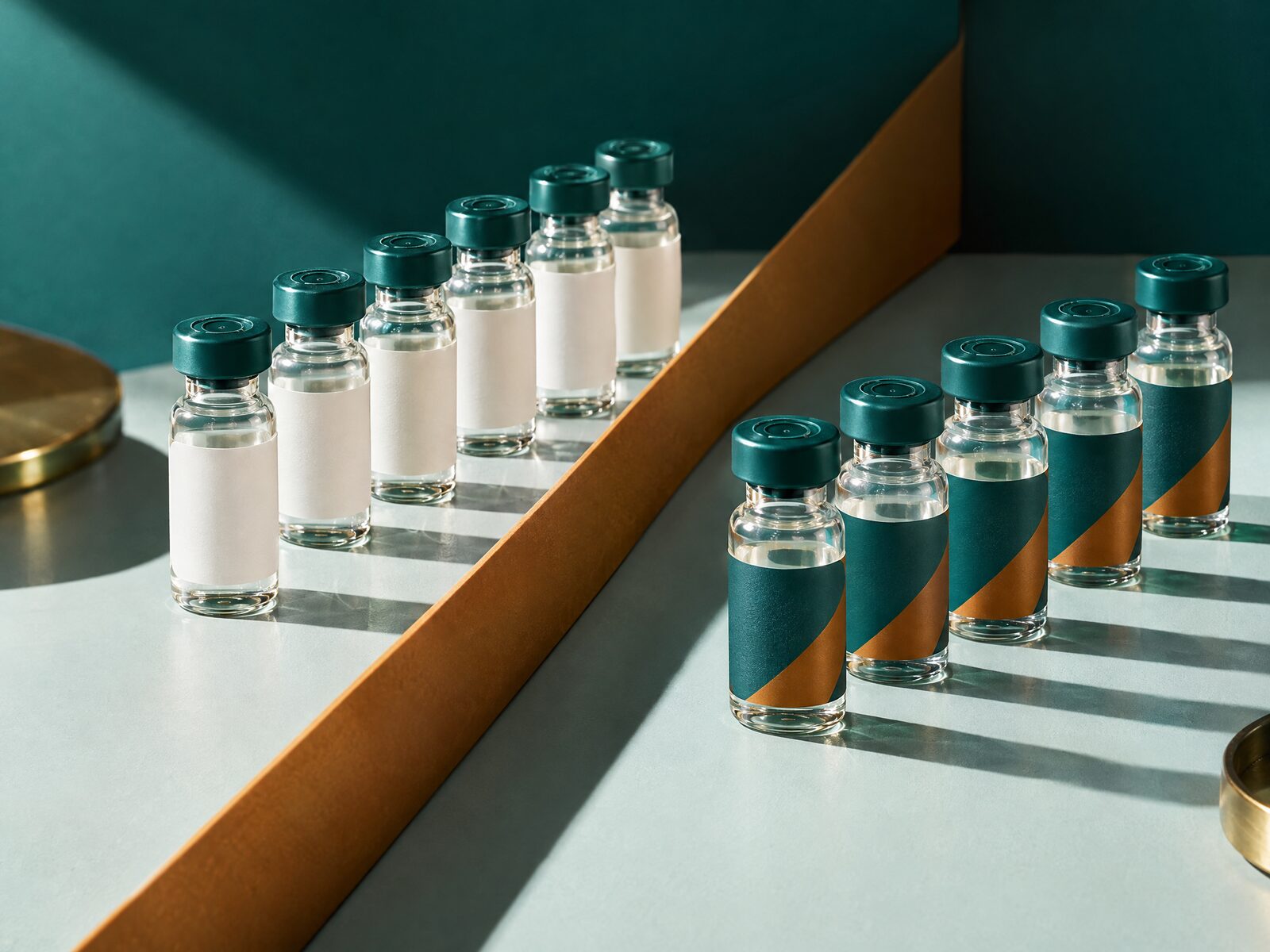
White label peptides are a supplier’s existing product, sold to many brands, with each brand’s label on the vial. Private label means the supplier adapts a base product to one brand’s specs. For a new research brand, we’d start with white label and pay for independent testing of your own batches from day one. That gets you to market without tying up cash in inventory, and without pretending you have something exclusive when you don’t.
The label is the easy part of either model. The hard part is who holds the certificate of analysis, and whether the batch in your box is the batch on that certificate.
Here’s how the two models actually differ for peptides, what to verify before you order, and when it makes sense to switch.
White label vs private label peptides: the actual difference
The definitions are simple:
- White label: the same existing product is sold to many brands, and each adds its own branding.
- Private label: the manufacturer adapts a base product to one brand’s specifications.
In supplements or skincare, private label often means a tweaked formula. With peptides, that idea mostly doesn’t apply. A peptide is a defined sequence; there’s no secret recipe in the compound itself for you to own. What private label can change is everything around it: the amount per vial, the vial format and cap, the purity spec you’ll accept, the testing protocol, and whether your batch is shared with anyone else.
What you own is the same in both models: your brand name, your label artwork, your product page copy, your photos and your customer list. Be honest about which model you’re on. Calling a white label product “our proprietary formula” or “manufactured in-house” is a false claim, and it’s the kind of thing that unravels the first time a buyer compares COAs across brands.
How the economics and control compare
Here’s the comparison we walk founders through:
| White label | Private label | |
|---|---|---|
| Who else sells it | Many brands, often the same batch | Only you, if the contract says so |
| Typical MOQ per SKU (general CPG figures) | 500 to 1,000 units | 1,000 to 5,000 units |
| Lead time | Shorter: stock exists, you add the label | Longer: production run, then testing and labelling |
| Control over spec | Take it or leave it | Amount per vial, vial format, purity spec, testing terms |
| Batch exclusivity | Rarely | Yes, if written into the contract |
| Who holds the COA | Usually the supplier | You can require your own, per batch |
| Cash tied up | Lower | Higher |
| Switching suppliers | Easy | Harder, with more to renegotiate |
A note on those MOQ numbers. They come from a general consumer-goods and supplements reference (which also puts custom formulation at 5,000 to 25,000 or more units), not from peptide-specific data. We couldn’t find a reliable industry-wide MOQ for peptides, and real offers vary wildly: one overseas supplier lists a minimum of “1 box (10 vials)” with custom labels available. Treat any MOQ as a negotiation, not a standard.
The bigger economic difference is less obvious. On white label, you compete with every other brand selling the same batch, so you compete on price and service. Private label lets you compete on consistency and proof, which is a more defensible place to be, but you pay for it in cash and commitment.
Who holds the COA, and why it matters more than the label
This is where white label goes wrong most often.
On a white label deal, the COA you’re handed is usually the supplier’s. It may be in-house rather than independent, it may name the supplier rather than you, and it may cover a batch that’s been split across a dozen brands. That doesn’t make it fake. It does mean it’s not your evidence.
Finnrick’s guide to reading a certificate of analysis puts it bluntly: a COA without a vendor name or batch ID “is entirely worthless.” It also says to check that the COA batch matches the vial, and to ask for a URL to the original report rather than a PDF, because “COAs can be edited after issuance.”
So our standing advice, on either model:
- Send samples from your own received batch to an independent lab, with your brand as the vendor on the report.
- Publish that report, not a supplier PDF with the name cropped out.
- Use the lab’s verification system where it has one. Janoshik, for example, says every report is verifiable through its verification page using a task number and unique key.
On private label, write testing into the contract: which lab, per batch, before shipment, and what happens if a batch fails your spec.
What to verify in a peptide supplier before you order
We’d run this list before the first order on either model:
- Ask for a recent COA and read every field. Product name, label claim, vendor name, lot, the date the lab received the sample, HPLC purity, MS identity, quantity against the label claim, test date, and the lab’s name, accreditation and signature.
- Verify it at the lab. If the lab offers verification, use it. If the supplier can only send a PDF, ask why.
- Order samples and test one yourself. Send it to an independent lab without telling the supplier which vial you sent.
- Match the lot number. The lot on the vial you received should match the COA you were shown.
- Ask how lots work. Is one lot split across brands? Will they tell you when the lot changes? Can you request a specific lot?
- Treat purity claims as claims. A supplier listing “≥99% (HPLC)” on its product page is making a marketing statement until a batch COA you can verify says so.
- Get packaging specs in writing. Exact vial dimensions, cap color and fill format, so your labels fit. Our peptide vial label guide covers why a millimetre of diameter matters.
- Agree what happens on a failed batch. Replacement, refund, or credit, and who pays for the retest.
If a supplier gets defensive at step 3, that’s your answer.
What your packaging and site need either way
White or private, the obligations on your side are identical.
Labels. Product name, amount in the vial, lot number, storage, and an RUO statement only if it’s accurate. No dosing, no reconstitution instructions, no benefit words. The label must describe the product actually in the vial, which means reprinting if the supplier changes the amount or format.
Photos. On white label, the supplier’s stock render is probably on thirty other sites. Shoot your own vials with your own labels so what buyers see matches what arrives.
Site. Product pages with specs, not effects. A COA for every batch you sell. No dosing guides, no reconstitution calculators, no bacteriostatic water bundled alongside. Those last items are exactly what FDA cited in its August 2026 warning letters to peptide sellers, based on website review alone.
And the honest point about underwriting: choosing white or private label doesn’t change how a processor sees a research-use-only catalog. LegitScript’s peptides guide for payment processors lists lab-style branding with injectable vials as a red flag, and some processors that publicly advertise peptide accounts (for example Corepay) say outright that they don’t support RUO sellers. Good packaging won’t fix that. What helps is running the business as a genuine research supplier, consistently, across every page and channel. We work with research suppliers who want to run a clean, defensible business, and with clinics and telehealth brands that can qualify for certification. We don’t help anyone dress up human-use sales as research.
If you’re unsure where your labels or site copy sit legally, a lawyer familiar with FDA and FTC rules is worth an hour before launch.
Should a new brand start with white label peptides?
White label, with your own independent testing on every batch you receive. Our reasoning:
- Cash. You don’t know yet which five SKUs will carry the business. Committing thousands of units per SKU before you know is how inventory ends up written off.
- Label iteration. Your first labels will change. Short runs on white label let you fix them without scrapping stock.
- Supplier learning. A few white label orders tell you how a supplier handles lots, communication and problems, before you sign a bigger contract.
The independent testing is the non-negotiable part. It’s what separates “we resell a supplier’s vials” from “we know what’s in our vials”.
When to switch to private label (a judgment call, not a formula):
- A SKU sells consistently enough that you’d clear the MOQ comfortably within the storage window you’re happy with.
- You’ve had a batch inconsistency on white label and want contractual testing terms.
- You want a specific amount per vial or vial format the white label range doesn’t offer.
- You want batch exclusivity, so your COA describes a batch no one else is selling.
Don’t switch the whole catalog at once. Move your two or three best sellers first, keep the long tail on white label, and see how the new supplier handles its first two batches.
What we’d do this week
Pull the COAs for everything you currently sell and check each one against Finnrick’s fields: vendor name, batch ID, matching lot on the vial. Book independent testing for anything that fails. Then list your top three SKUs by sell-through and ask your supplier for private label pricing on just those, so you know the numbers before you need them.
If you’re launching or switching suppliers and want labels and boxes designed around the real vial specs, our peptide label and packaging design work starts from exactly that checklist.
FAQ
What does white label peptides mean?
It means a supplier sells the same existing product to many brands, and each brand puts its own label on it. You own the branding and the customer relationship, not the product spec, and other brands may be selling the same batch.
Is private label better for a research peptide brand?
Not at the start. Private label gives you control over spec, testing terms and batch exclusivity, but it needs higher minimum orders and more cash. Most new brands are better served by white label plus their own independent testing, switching their best sellers once demand is proven.
Can I use my supplier’s COA on my website?
You can, if it’s genuine, unedited and matches the lot you’re selling, but it’s the supplier’s evidence, not yours. We’d commission independent testing of your own batches with your brand named as the vendor, and publish that alongside a verification link.
What is a typical MOQ for private label peptides?
There’s no reliable industry-wide figure. General consumer-goods references put private label at 1,000 to 5,000 units per SKU, but peptide suppliers range from a single box of vials upward. Negotiate per SKU and get it in writing.
